Progressive Push-Ups: From Beginner to Advanced
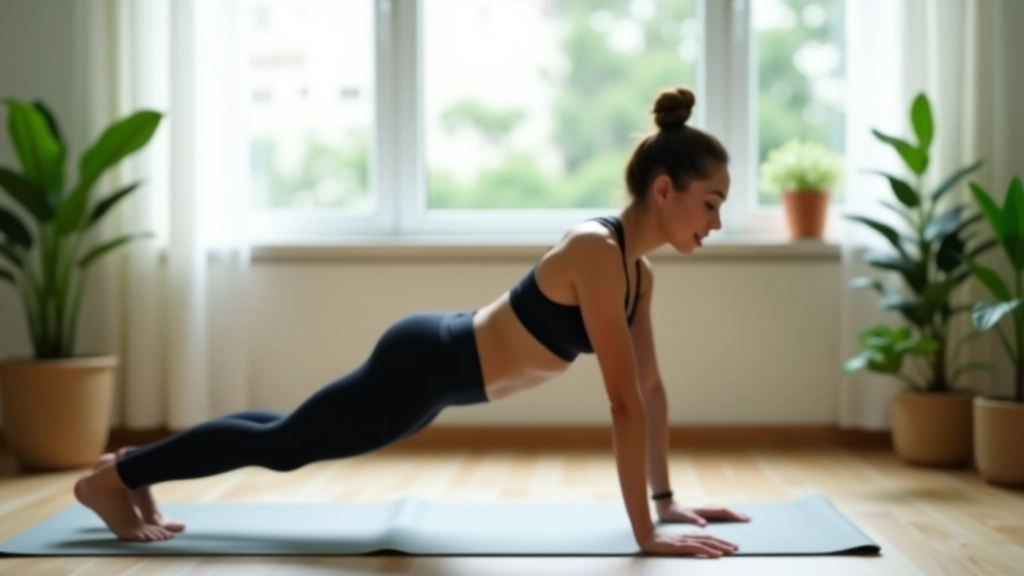
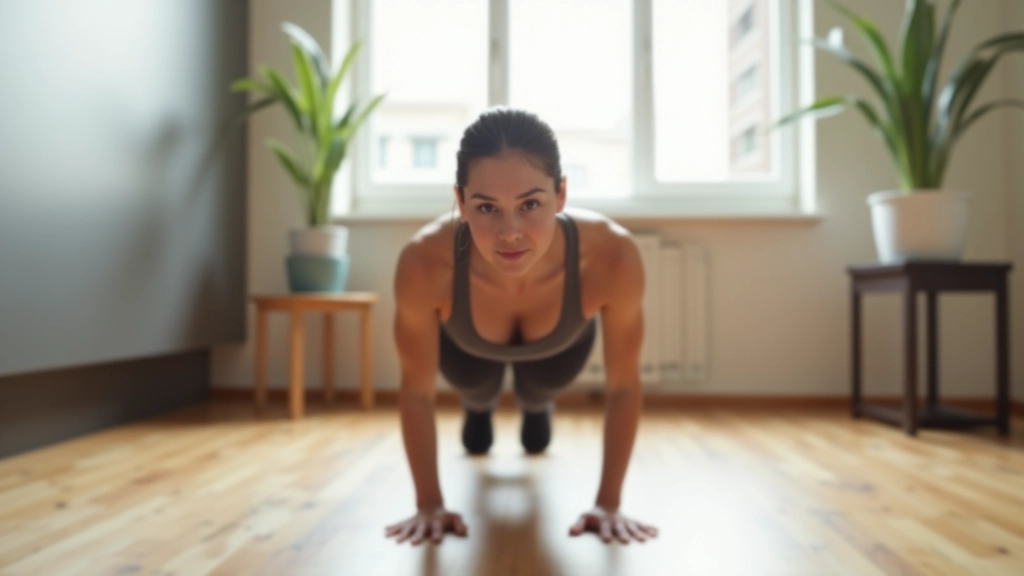
Start with wall push-ups and work your way to one-arm variations. We break down each progression step.
Squats, lunges, and glute work for small apartments. Three 15-minute routines you can do in your bedroom without bothering neighbors.
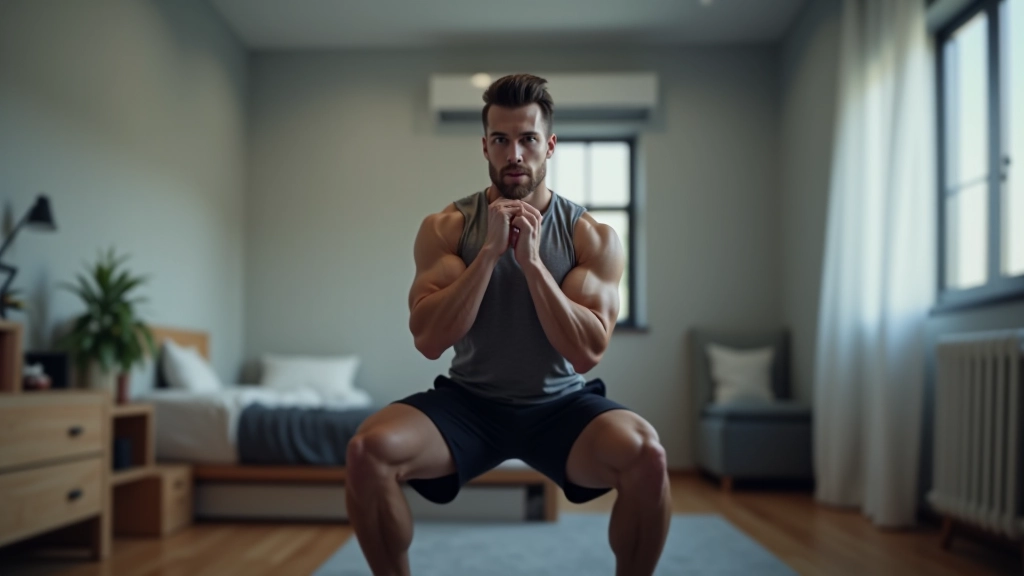
Your legs are your largest muscle group. Training them doesn’t require fancy equipment or even much room — just your bodyweight and a clear floor about the size of a yoga mat. That’s it. Most people skip leg day at home because they think they need a squat rack or dumbbells. They don’t.
The circuits we’ve built here focus on movements that work within tight quarters. No jumping variations that’ll have your downstairs neighbors knocking. No equipment that takes up half your room. Just proven exercises that build real strength and muscle when you do them consistently.
Pure bodyweight training. Your legs provide all the resistance required.
Controlled exercises designed for apartment living. No impact noise.
15 minutes per session. Three circuits to match your current fitness level.
This circuit builds your baseline strength without any fancy variations. It’s the perfect starting point if you’re new to bodyweight leg training or coming back after time off.
Feet shoulder-width apart, lower until your thighs are roughly parallel to the floor. Keep your chest up. Rest 15 seconds.
Step forward with one leg, lower your hips until both knees bend at 90 degrees. Push back to start and alternate legs. Rest 15 seconds.
Lie on your back, knees bent, feet flat. Push through your heels to lift your hips. Squeeze at the top. Rest 15 seconds.
Do 3 rounds of this sequence with 2 minutes rest between rounds. That’s it. Most people feel real muscle activation after week two.
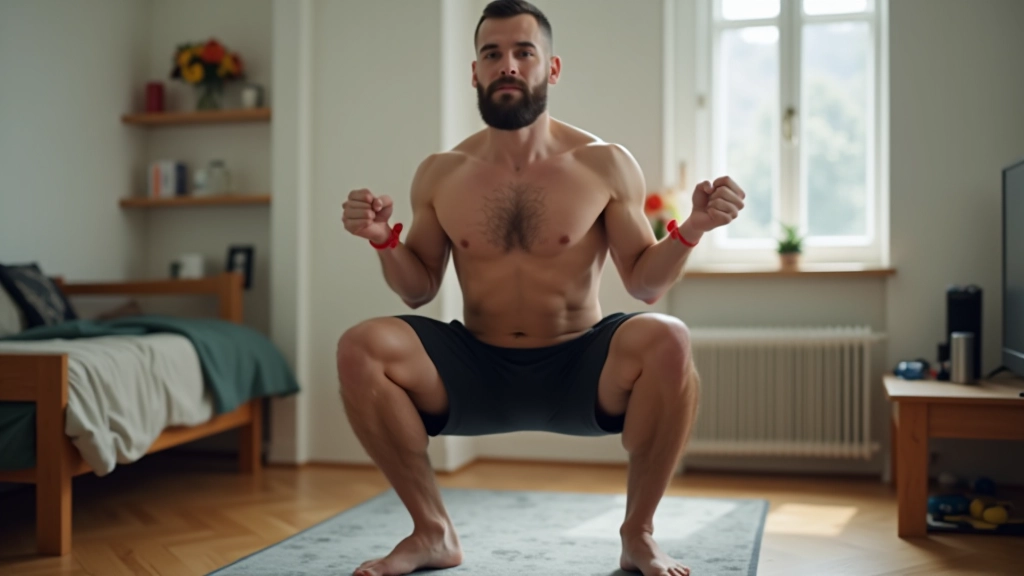
Once circuit one feels manageable, move here. You’re doing the same exercises but with longer work intervals. This builds muscular endurance — your ability to keep working even when your muscles are tired.
Same form as before. Aim for quality over speed. Rest 10 seconds.
Step backward instead of forward. This variation is easier on the knees for many people. Rest 10 seconds.
Same as regular bridges but keep one foot slightly elevated. This increases difficulty significantly. Rest 10 seconds.
Do 3 rounds with 90 seconds rest between rounds. You’ll notice your legs burning — that’s the point. That’s where real adaptation happens.
These circuits are educational guides based on common bodyweight training principles. They’re not personalized to your individual fitness level, injuries, or health conditions. If you have existing knee problems, lower back issues, or other health concerns, talk to a doctor or physical therapist before starting any new exercise program. Stop immediately if you feel sharp pain — muscle soreness is normal, pain is not. Everyone’s body is different, so adjust the intensity to match where you’re actually at right now.
You’ve built solid strength and endurance. Now we add complexity. These variations increase difficulty without needing any equipment. Your bodyweight alone provides enough resistance for serious muscle development.
Place one foot behind you on a chair or bed. Lower into a lunge position with your front leg. This creates a huge imbalance that forces your muscles to work harder. Rest 10 seconds between legs.
Can’t do a full pistol squat yet? Hold onto something stable and lower yourself as far as you can on one leg. The progression takes weeks or months. That’s fine. Rest 10 seconds.
Hold the top position of a single-leg bridge and do small pulses. This variation creates intense glute activation. Rest 15 seconds between legs.
Do 3 rounds with 2 minutes rest between. This circuit is demanding. You should feel significantly challenged by the end.
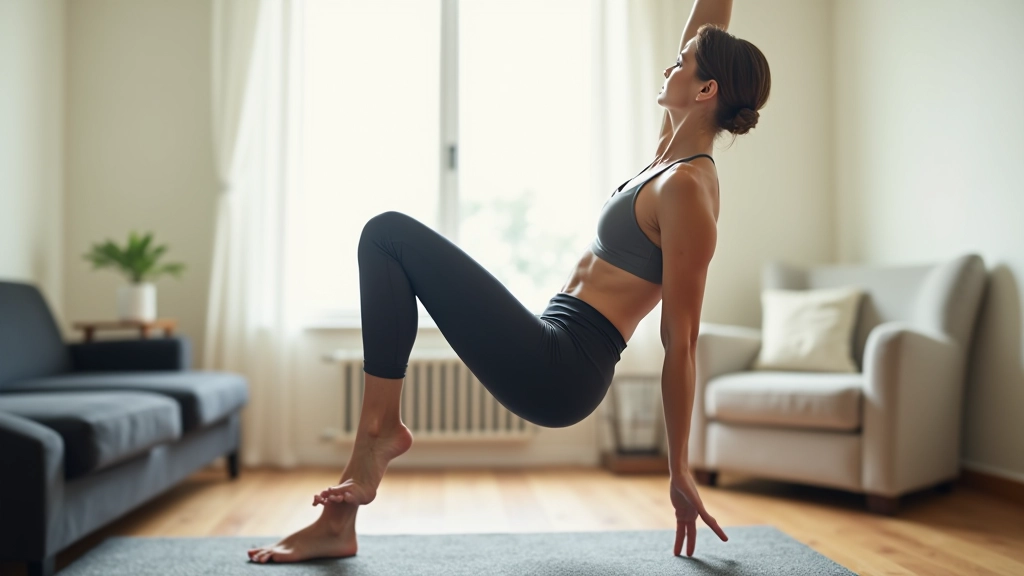
Do circuit one three times per week. That’s Monday, Wednesday, Friday. Give yourself at least one rest day between sessions.
Alternate between them. Do circuit one on Monday, circuit two on Wednesday, circuit one on Friday. This keeps things fresh.
One circuit per session. Circuit one Monday, two Wednesday, three Friday. When you cycle back, you’ll be stronger than last time.
Real progression isn’t about doing everything at once. It’s about small increases over time. If circuit one still feels challenging in week three, that’s completely fine. Stay there longer. There’s no timeline. Your body will tell you when it’s ready for more.
Move furniture to the edges. You need about 6 feet by 3 feet clear floor. That’s roughly the size of a yoga mat. Don’t try to squeeze in a workout around obstacles.
Five minutes of light movement. Walk around, do leg swings, some bodyweight squats at 50% intensity. Your joints need preparation before hard work.
Slow down your movements. A squat should take 3 seconds down, 1 second pause, 2 seconds up. Slower = harder = better results. And it’s quieter.
Write down how many reps you complete in each exercise. Next week, try to beat that number. Small improvements compound into real progress.
Your muscles grow when you’re resting, not during the workout. Seven to eight hours per night makes a massive difference in strength gains.
You don’t need fancy supplements. Eggs, chicken, fish, tofu, or beans with every meal. Your muscles need building blocks to adapt and grow stronger.
That’s the real point here. Forget what you think you need. No dumbbells, no machines, no fancy setup. A small bedroom and your own bodyweight is enough to build serious strength. The circuits we’ve outlined work because they’re progressive. You start simple and gradually increase difficulty as your body adapts. That’s how strength training actually works.
Pick a circuit that matches your current fitness level. Do it consistently three times per week. Track your progress. When it gets easier, move to the next circuit. That’s the entire system. There’s no secret. There’s no trick. Just consistency and small improvements week after week.
Hong Kong living means tight spaces. But tight spaces don’t mean weak legs. You’re now equipped with three different circuits designed specifically for apartment living. The hard part isn’t knowing what to do — it’s actually doing it. Start Monday. Stick with it.